Set limits on rides, water runs and phone charging during a winter blackout.
On the second day of a winter blackout, you tell a neighbour you can pick up water for them. On the third, they ask if you can take someone into town. By the fourth, three households are waiting for your next trip, and you still need enough fuel to get your own family out if the house gets too cold.
Each request made sense on its own. The trouble is that everyone heard “I can help” and planned around a different promise.
A neighbourhood can share a surprising amount of work during a winter blackout. Start by putting a number and a time limit on what each household can offer. Then agree on when to review those commitments and how to let people know if they change. That conversation is easier to have before someone is standing at your door with two empty water jugs.
Table of Contents
Count what you can spare during a winter blackout
Start with the next 24 hours. What does your household need to get through that period, and what do you need to keep in reserve if conditions worsen?
If you have the only vehicle in regular use on your road, count the trips you can make while keeping enough fuel for your own essential travel. If you have backup power, count the devices you can actually charge after covering the loads your household relies on. Count your time, too. An hour spent doing a water run is an hour someone else may need to spend looking after your home, animals or family.
Write down your offer in a sentence someone else could act on.
- Rides. “I have two belted seats on tomorrow’s town run, if the road is passable.”
- Water. “I can bring back two extra 10-litre containers from the same stop. Have your containers ready by 11.”
- Charging. “I can charge two phones from noon to one. Bring your own cables.”
- Check-ins. “I can knock on two doors before dark. If I can’t make it, I’ll tell you by three.”
A specific offer helps the other household decide what they still need to arrange. You can share the number of seats, containers or charging spots available while keeping your own reserves private.
|
||||||
| Affiliate link: CPN may earn a commission when you purchase through this link. |

Work through three households on day four
Say three homes on a rural road are on day four of a winter blackout. One household has a vehicle and can make a single daytime trip to a confirmed water pickup point. A second has enough spare battery capacity to charge two phones. A third can do the afternoon check-ins while the driver is away.
The driver has two spare seats and room for two extra 10-litre water containers. But one neighbour needs a ride into town, and the water pickup is in the opposite direction. This is the detail that disappears when the plan says “one trip available.” A seat only helps if the vehicle is going where the passenger needs to go.
At the morning check-in, the three households decide to use that trip for water. The household that asked for a ride hears the decision while there’s still time to find another option. The charging household sets a one-hour window and asks people to bring cables. The neighbour doing check-ins tells everyone when they’ll be back with any requests that still need attention.
Now suppose the road is still icy the next day and the driver needs to keep the remaining fuel for their own household. They tell the other two homes at the morning check-in that the water run is off. If a nearby pickup point is open and the route is safe on foot, a cart might cover part of the work. Otherwise, everyone needs time to make a different arrangement.
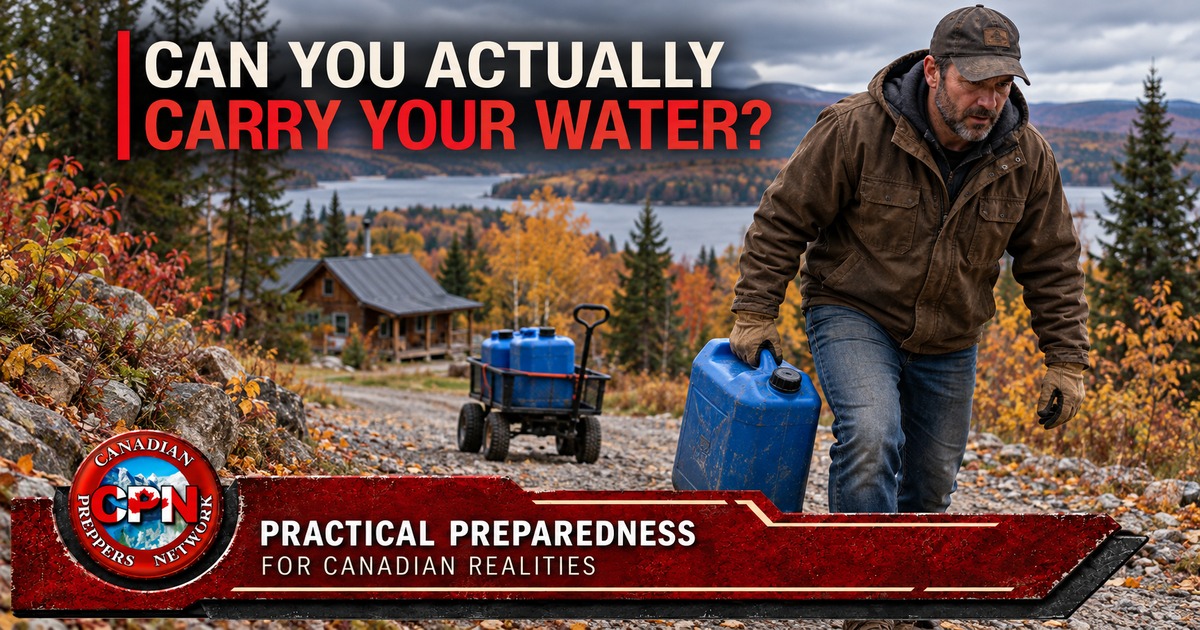
If you’re counting on a hand truck or cart for short supply runs, try it on the route with a load before winter. Check whether you can get it over the snowbank at the end of the drive and control it on the return downhill. CPN’s illustrated Bicycles, Carts & Manual Transport PDF covers hand trucks, wheelbarrows, cart castors and winter storage.
Agree on what gets priority before two requests collide
If you have one trip available and two requests, ask what happens if each request waits until tomorrow. A household about to run out of drinking water has a different problem from a household that wants to top up while the road is open. A phone someone relies on to arrange essential help may come ahead of a spare phone. Then look for a way to combine requests that are going to the same place.
Keep the decision tied to the job. Someone who needs a ride today may be able to take a check-in shift tomorrow. A household that has little to spare can still tell the group what it needs. An immediate emergency needs its own response. The next scheduled check-in is for routine coordination.
If you have to turn down a request, say so early and be clear about what you can commit to. “I can bring water back from tomorrow’s trip, but I can’t make a separate run tonight” gives the person something definite to work with. The most frustrating answer during a winter blackout is often “maybe later,” especially when someone puts off looking for help because they expect you to come through.
|

Give every promise an expiry time
Review offers at a time people can remember. On a rural road that might be a morning call and an afternoon doorstep check. In an apartment building it might be a short daily meeting in the lobby with the neighbours who agreed to take part. Decide before a winter blackout how you’ll pass along changes if texts stop going through. A regular in-person check-in gives everyone a second way to hear what’s happening.
Keep a short record on paper. Give a copy to one other participating household so the plan can keep moving if the person who usually coordinates has to step away.
| What to record | Example |
|---|---|
| What you can offer | Two extra 10-litre water containers |
| Who will do it and when | Morgan, on the noon trip |
| When the offer changes | Cancel if the pickup point closes or the road becomes unsafe |
| Who needs to hear and by when | Tell both households by 11 a.m. |
| When you’ll review it | Tomorrow at the 9 a.m. check-in |
The same record works for a single favour. If you loan out a power bank, agree on when it comes back. If you’re giving a ride, confirm whether the return trip is included. At a shared charging spot, set out a rechargeable light so people can see which cable is theirs without running down their phone batteries. Small details become arguments when two people have planned their day around different assumptions.
A prolonged winter blackout can leave the most dependable people carrying three jobs because everyone assumes they’ll keep doing them. Ask one neighbour today what they could realistically offer for one day if the power went out. Tell them what you could offer, when you’d have to stop, and how you’d let them know. A small promise you can keep gives both households something they can plan around.
Free CPN download
Stress-Test Your First 72 Hours
Before committing water, power or transport to another household, work out what your own home needs through the first three days.
Related Reading
- Mental Resilience & Community Building in Canada
- Building a Mutual Assistance Group in Your Neighbourhood
- Communications in Canada
Buying Box
Amazon.ca
As an Amazon Associate, Canadian Preppers Network earns from qualifying purchases.
- USB-C power bank. Test the bank and cables against the phones you expect to charge.
https://www.amazon.ca/s?k=usb-c+power+bank&tag=canadianprep-20&ascsubtag=dailypost - Emergency water storage containers. Look for containers rated for drinking water with a secure cap and a handle you can grip with gloves.
https://www.amazon.ca/s?k=emergency+water+storage+containers&tag=canadianprep-20&ascsubtag=dailypost
VEVOR Canada
Canadian Preppers Network may earn a commission from purchases made through these VEVOR affiliate links.
- Folding hand truck. For moving secured water containers on cleared walkways. Test it with a load before counting on it for a supply run.
- Rechargeable LED work light. Light a shared charging table or a sheltered spot where neighbours can leave and collect supplies.