How much battery does a fridge need for one night? Most people guess, and most guess low. A battery that’s too small quits at 3 a.m., and the food you wanted to save is warm by breakfast.
This guide helps you find your own number in about 10 minutes. It uses simple math and one cheap plug-in meter, not a sales chart.
The sizing happens in step 2 and step 3. Step 1 costs nothing, and it saves more food than any battery will.
At a Glance: How Much Battery Does a Fridge Need
- Free first: A closed fridge keeps food safe for about 4 hours, so keep the door shut.
- Your number: Divide the yearly kilowatt-hours on your fridge’s label by 365, then cut that in half for a night of about 12 hours.
- The margin: Add about 40 percent on top, because a battery loses power as it runs.
- The catch: A fridge motor needs a burst to start, so check the station’s surge rating too.
- Later nights: One night is easy. Night 2 and beyond only work if you can refill.
Survival Life earns a commission if you buy through the Amazon links on this page, at no extra cost to you. It doesn’t change what we recommend or the order we recommend it in.
Step 1: Give your fridge a head start for free
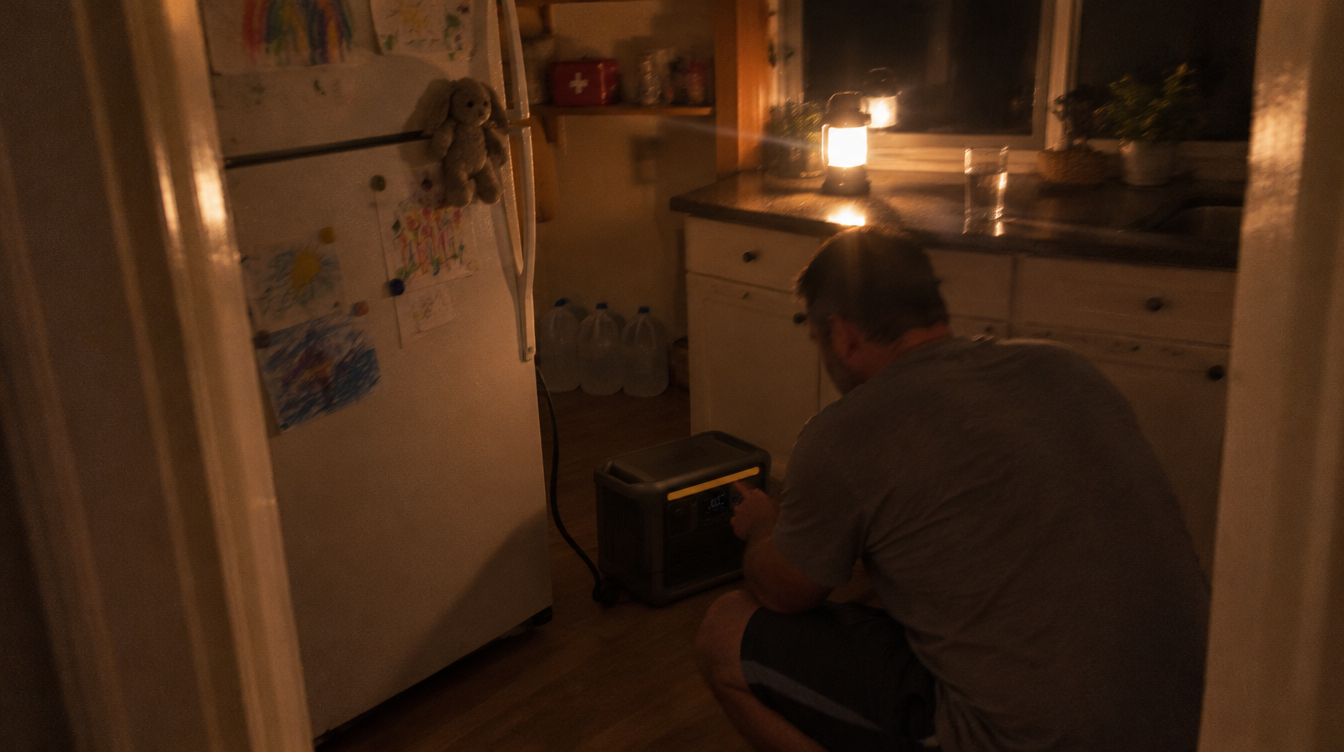
Before you shop, learn how long the fridge protects you on its own. A fridge keeps food safe for about 4 hours during an outage, as long as you keep the door closed. A full freezer holds its temperature for about 48 hours. A half-full one holds for about 24 hours.
Those hours are your buffer. The battery only has to cover the gap after that.
A thermometer inside the fridge helps here. It tells you whether the cold is holding, so you aren’t guessing by touch. Keep it where you can read it without opening the door.
So tape a note on the door that says, “Don’t open.” Then list what you’ll need before the outage starts, so you open the door once, not five times.
If you know a storm is coming, fill the empty space in your freezer. A packed freezer holds the cold longer than a half-empty one.
One more free move helps. Pull out the few things you’ll need soon, like milk for the kids, and put them in a small cooler. Then you won’t have a reason to open the fridge again.
Free steps only stretch the clock. To cover a full night, you need a number. That’s step 2.
Step 2: Find your fridge’s real nightly number
You can get this number two ways. Do the label math first because it takes 2 minutes. Then confirm it with a meter if you want certainty.
The label math
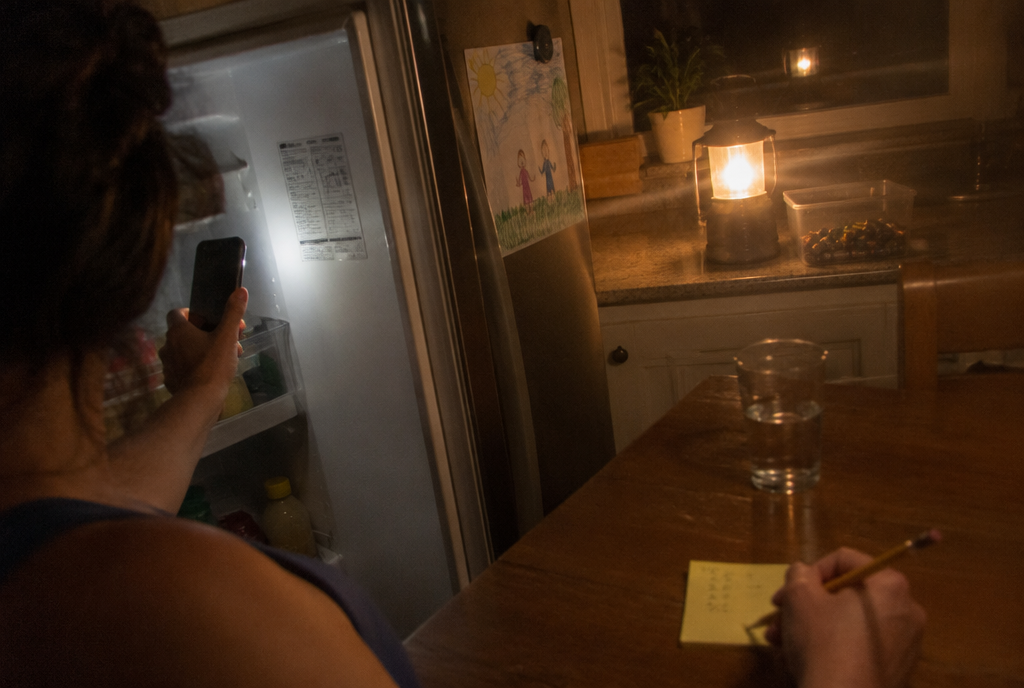
Open the fridge and find the energy label or the sticker on the inside wall. It lists yearly use in kilowatt-hours, or kWh. Write that number down.
Here’s a worked example. Say your label shows 400 kWh per year.
- 400 kWh is 400,000 watt-hours, and dividing by 365 gives about 1,100 watt-hours per day.
- One night is about 12 hours, so half of that is about 550 watt-hours.
That 550 is the energy your fridge pulls overnight. It isn’t the size of the battery you need. Step 3 turns it into one.
The meter check
A fridge doesn’t run all the time. It cycles on and off, so a 30-second reading can fool you. A plug-in watt meter solves that. It records watt-hours over time.
Plug the meter into the wall. Plug the fridge into the meter and leave it for a full 24 hours. The meter keeps a running total of watt-hours. Use that real total instead of the label math.
A short video shows what running a fridge from a power station looks like:
Older fridges tend to run longer than their labels say. So do fridges in a hot kitchen or packed to the brim. If your fridge is old, trust the meter.
If your fridge has no label, or the label is worn off, skip the math. The meter is the better tool anyway.
Now you know what the fridge uses. The next step is sizing a battery that can deliver it.
Step 3: How much battery does a fridge need once you add the margins
Here’s where most people get stuck. The label math gives you what the fridge uses. It doesn’t give you what the battery must hold.
A power station loses some energy turning battery power into wall power. It also uses a little just by being switched on. As a planning rule, count on losing about 30 percent. To cover that, divide your night number by 0.7, which adds about 40 percent.
Using the example above, 550 divided by 0.7 is about 790 watt-hours. Round up to 800. That’s the watt-hour rating to look for on the station’s listing.
Want a cushion? Round up again. A station a little too big is annoying. A station a little too small is a failed night.
Your job in this step is a station rated at 800 watt-hours or more, with a surge rating above your fridge’s start-up burst. These 2 both list about 1,000 watt-hours, so they’re alternatives, not a pair to buy. One limit: they cover one night for an average fridge, so night 2 still needs the refill plan in step 4. (paid links)
As an Amazon Associate, Survival Life earns from qualifying purchases.
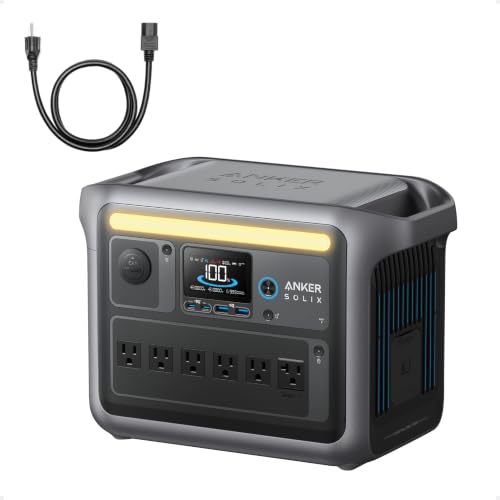
Anker SOLIX C1000 Portable Power Station with Car Charging Cable, 1,056Wh | Full Charge in 58 Min…
- Charge Up in a Flash: Achieve 80% battery capacity in just 43 minutes with the Anker SOLIX C1000’s UltraFast recharging…
- A Decade of Power: Trust in a decade-long journey with the Anker SOLIX C1000 Portable Power Station, featuring exceptional…
Sale

EF ECOFLOW Delta 3 Portable Power Station, 1024Wh 1800W | LiFePO4 Battery, Full Charge in 56 Min…
- Full Charge in 56 Min. With DELTA3’s upgraded technology combining 500W solar input and 1500W max AC input, a full charge is…
- Flexible Expansion up to 5kWh. The DELTA 3 Series integrates with EcoFlow’s ecosystem, allowing expansion up to 5kWh with…
Last update on 2026-11-29 / Affiliate links / Images from Amazon Product Advertising API
What a second night does to the math
Now stretch the same example to a full day. Your fridge pulls about 1,100 watt-hours in 24 hours. Divide by 0.7 and you land near 1,570.
That’s almost double the one-night target. It shows why a battery sized for tonight won’t carry you through tomorrow. It also shows why the recharge plan in step 4 matters.
Check the surge rating
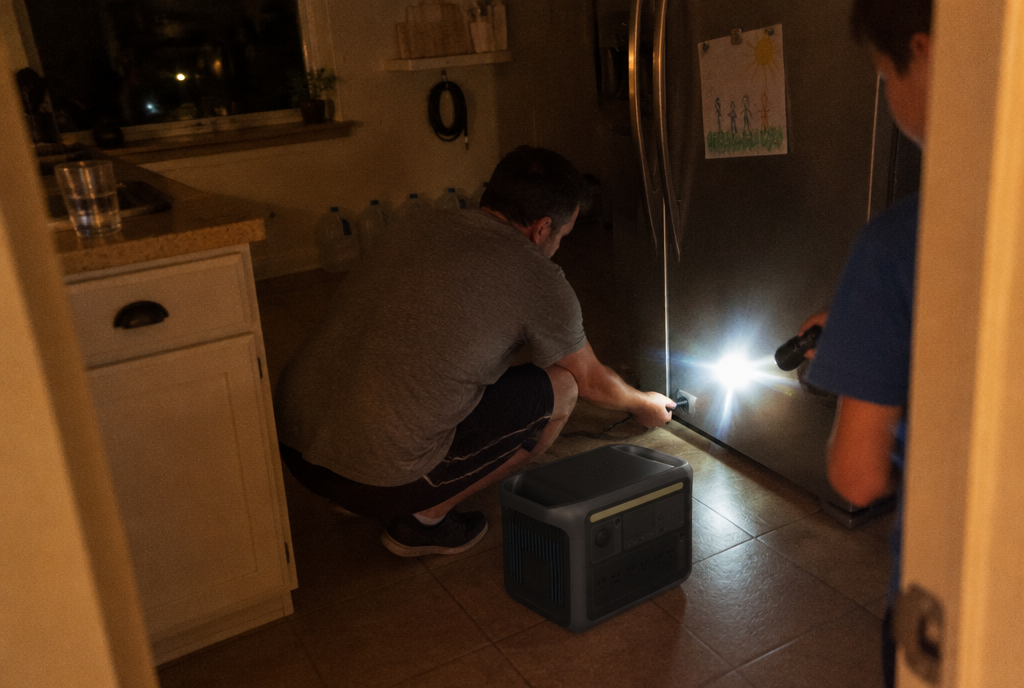
A fridge motor often pulls much more power for a second or two when it starts. As a planning rule, allow for about 3 times the running watts. If your meter shows your fridge running at 120 watts, you want a station that can handle about 360 watts of surge.
Most stations list a surge number in their specs. If it’s missing, pick a model that lists it.
Keep the load honest
Your night number only covers the fridge. A phone charger or a lamp adds a little. A space heater or a microwave adds a lot, and it can drain the station long before morning.
So decide what else shares the station, and add its watt-hours to your target. If you can, give the fridge the station to itself.
Connect it safely
Plug the fridge straight into the station when you can. If you need a cord, use a short heavy-duty one.
Don’t plug a station into a wall outlet to feed the house. If you want backup power wired into your home, hire a licensed electrician to install it.
You’ve covered one night. Longer outages are a different problem, and the last step handles them.
Step 4: Plan the recharge for night 2 and beyond
One night is a battery job. Three nights is a recharge job. A battery you can’t refill is just a bigger cooler.
Some outages last longer than one night, and those are the ones that spoil a fridge full of food. A plan that only covers the first night leaves you guessing on the second.
So think about how your station gets power back. You have a few options, and each has a limit:
- Solar panels: They only work in daylight, and slowly. Check the station’s maximum solar input in watts and its stated recharge time.
- Your car: A car outlet can top up a station while you drive. It won’t help if the car sits still.
- A generator: It refills fast, but you must run it outside. Never run one inside a home or a garage, even with the door open, because the exhaust carries carbon monoxide.
Whatever you pick, work out how much fridge energy you need per day, and how much your recharge source adds per day. If the second number is smaller, the battery runs out.
For solar, here’s a rough way to check. Multiply the panel’s watts by the hours of strong sun you expect. That’s the best-case add for the day. Clouds and shade will cut it, so treat the result as a ceiling and not a promise.
That’s the whole answer to how much battery does a fridge need across more than one night. The battery covers the dark hours, and the refill covers the rest.
Common mistakes when sizing a fridge battery
- Skipping the margin. The label number is what the fridge uses, not what the battery must hold. Always add about 30 percent for losses.
- Skipping the surge rating. A station with enough capacity can still shut off when the fridge motor kicks on.
- Guessing instead of measuring. Old fridges and fridges in hot kitchens run longer than their labels say. A 24-hour meter reading ends the guessing.
- Opening the door all night. Every peek lets cold out and makes the fridge run longer. Keep it shut from the first minute.
- Forgetting the recharge. A night is easy. A long outage needs a way to fill the battery back up.
- Sharing the station. Every extra device eats into the fridge’s night. Add up everything you plan to plug in, then size for the total.
Frequently asked questions
Divide the yearly kilowatt-hours on your fridge’s label by 365, then cut that in half for one night. Add about 40 percent for losses. For a fridge with a 400 kWh label, that comes to about 800 watt-hours.
A closed fridge keeps food safe for about 4 hours. A full freezer holds for about 48 hours, and a half-full one holds for about 24 hours.
No. A fridge motor needs a big burst to start, and most small power banks can’t deliver it or the watt-hours for a full night.
A power station loses some energy turning battery power into wall power, and it uses a little just by being on. Older and fuller fridges also run longer than their labels say, so a meter reading is the best check.
No. Run a generator outside, away from the house. Never run one inside a home or a garage, even with the door open, because the exhaust carries carbon monoxide.
Do one thing today
Open your fridge tonight and find the yearly kilowatt-hour number on the label. Write it on a sticky note, then do the math from step 2.
That one number answers the big question: how much battery does a fridge need in your kitchen? Stick the note inside your kit so it’s there when the lights go out.
Quick poll: If the power went out tonight, how would your family protect the fridge?
One path is a battery that runs the fridge through the night. The other is keeping the door shut and moving the food you need into a cooler.
What’s holding your plan back: the cost or not knowing the numbers? Tell us in the comments.