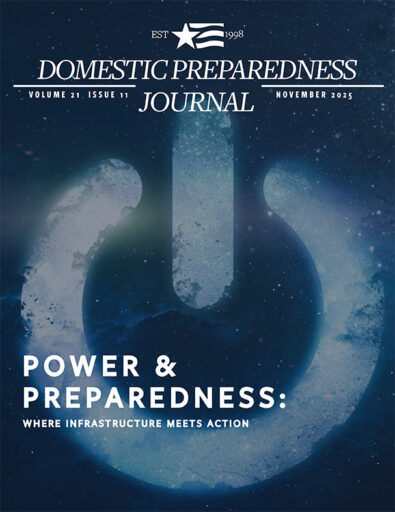


Editor’s Note: Powering Communities for Future Disasters
Emergency response in modern society is not the same as it was in past generations. Communities must be aware of the many risks and vulnerabilities they may face, as well as the necessary tools and people to keep them powered and connected during a crisis. Through a combination of traditional critical infrastructure, new energy sources, microgrids, batteries, etc., communities can remain powered and connected for generations to come.

Interoperability – The Power of Mobile Command
Mobile command buses serve as rolling nerve centers, boosting response speed, coordination, and situational awareness. At the 2025 National Homeland Security Conference, the Washington, D.C., Homeland Security and Emergency Management Agency deployed multiple mobile command buses for a “Command Bus Rally,” showcasing their real-time power in a disaster simulation.

From Students to Responders: Building the Future Disaster Workforce
Copy excerpt hereYoung people play active roles in local response and recovery, and the growing demand for skilled professionals in emergency management creates strong career opportunities for them. By engaging youth early, communities build resilience today and cultivate a new generation of leaders ready to meet future crises. Disaster-educated youth can inspire their families, strengthen community preparedness, and turn their passion for service into meaningful, lasting careers.

How Local Power Can Save the Grid
The United States power grid, including its planned growth of transmission capabilities, was not built for the new demands of data centers such as those used for artificial intelligence or cascading high-impact disasters. Yet, the interdependency that creates modern risk could also build resilience through local energy generation if it were prioritized. In “island mode, local energy can ensure data uptime and safeguard local water, food, and healthcare infrastructure.

Powering Through Crisis: Microgrids and Emergency Response
Aging infrastructure, growing weather events, and rising demand from data centers are straining the nation’s electric grid. Microgrids are emerging as an innovative way to strengthen power reliability and resilience for both routine and emergency operations.

Podcast – Put a Parsec on It: Off-Grid Connectivity for First Responders
Through partnerships with Verizon, Ericsson, and CAL FIRE, Parsec develops antenna technology that extends communication reach and strengthens reliability when infrastructure is down or distant. This discussion with Michael Neenan highlights real-world examples where improved connectivity has supported operations at the border, during wildfires, and across rural communities, showing how dependable communication can ultimately save lives.

The Data Center Dilemma: Understanding America’s New Grid Challenge
The rise of data centers is reshaping the risk landscape for the electric grid. Now essential infrastructure supporting hospitals, communications, finance, and government, data centers are vulnerable to – and potential drivers of – cascading failures when grid reliability falters. The real task now is to provide enough oversight to keep the grid stable and fair without stifling innovation.

Visualize the Data: How One Airport Prioritizes Its Emergency Plans
Every jurisdiction faces the challenge of managing and prioritizing its preparedness efforts. Hartsfield-Jackson Atlanta International Airport has developed an innovative formula designed to simplify that process. Built to work with data visualization software, this flexible model is adaptable for any jurisdiction and helps organizations identify priorities, allocate resources efficiently, and strengthen readiness across all emergency plans.

Green Energy Battery Storage and Impacts on First Responders
The stored-energy field is growing rapidly, and battery energy storage systems are expected to continue strengthening the nation’s grid. However, these systems introduce new risks—hard-to-extinguish fires and chemical exposure that endangers first responders. Awareness and specialized training are essential to manage these new hazards in a dynamic and dangerous environment.

Raw Materials: The Risk to Disaster Recovery
Disaster recovery rarely centers on the materials that make rebuilding possible. Modern infrastructure depends on fragile, geopolitically concentrated supply chains ill-suited for post-disaster demand. Recovery must increasingly hinge not just on leadership and logistics, but on the ability to rapidly secure and deliver the critical raw materials communities need to rebuild.
The post November 2025 appeared first on Domestic Preparedness.
Leave a Reply